The term Real World Assets (RWAs) is gaining traction fast in the crypto space. But many people still don't fully understand what RWAs are — or the immense potential their tokenization unlocks.
Tokenizing RWAs opens a new chapter in global finance by enabling real-world value to be brought onto the blockchain. It introduces an entirely new market with opportunities for early adopters to benefit, while offering everyday investors new ways to grow their wealth and diversify portfolios — even through fractional ownership.
What Are RWAs?
Simply put, Real World Assets are tangible, traditional financial instruments with intrinsic value — think bonds, stocks, gold, real estate, and even fine art.
Bringing RWAs on-chain means you can now buy a fraction of a Tesla or Apple stock, own part of a Picasso painting, or invest in Amazon and Netflix shares — all from your digital wallet.
Examples of RWAs
- Bonds: These allow you to invest in government or corporate debt in exchange for interest payments. Examples include U.S. Treasury bonds, Apple bonds, and Chicago municipal bonds.
- Stocks: These represent ownership in a company. Common RWAs in this category include shares of Amazon, Coca-Cola, and JPMorgan.
- ETFs (Exchange-Traded Funds): These are bundles of various assets — great for portfolio diversification. Examples include the Vanguard S&P 500 ETF (VOO) and SPDR S&P 500 ETF Trust (SPY).
- Arts & Collectibles: Think rare books, vintage items, and classic artwork.
Traditionally, access to these assets was limited to centralized systems — stock exchanges, legal contracts, banks — making them inaccessible to many. But tokenization is changing that.
What Is RWA Tokenization?
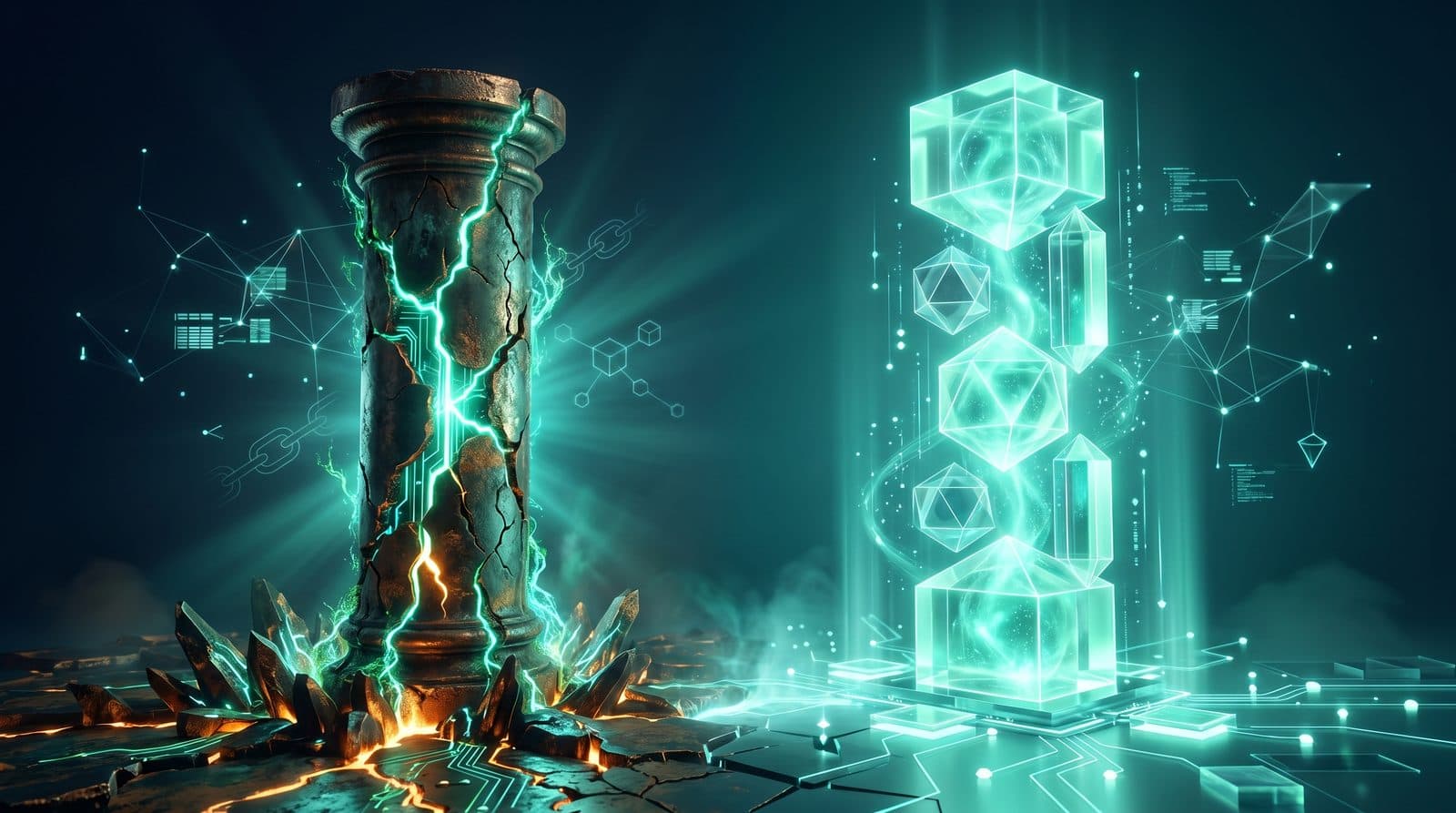
RWAs have traditionally existed off-chain. But thanks to blockchain technology, they can now be issued as digital tokens for trading, storage, or transfer — a process known as RWA tokenization.
This makes it possible to divide high-value assets into smaller, tradable digital units — opening the door for smaller investors to participate in markets that were once exclusive.
And this isn't just a concept anymore — it's a rapidly growing trend. Institutional interest is surging, and for good reason.
Why Tokenize Real World Assets?
Tokenization is more than a buzzword. It delivers real benefits:
- Global access: Tokenized assets can be accessed from anywhere, creating a truly borderless market.
- Increased liquidity: Digital assets are easier to trade, even in smaller quantities.
- Cost efficiency: By eliminating intermediaries like banks and brokers, investments become more affordable.
- Fractional ownership: Own a piece of a valuable asset without buying the whole thing.
- Faster transactions: On-chain transfers are significantly faster than traditional settlements.
- Transparency: Blockchain ensures full visibility into asset ownership and transaction history.
Together, these advantages are set to reshape the very foundation of traditional finance.
The Importance of Regulation
As exciting as all this is, tokenized RWAs come with serious responsibilities — especially around regulation.
The EU's Approach: MiCA
The European Union passed the Markets in Crypto-Assets (MiCA) regulation on May 31, 2023. This provides a unified legal framework for digital assets across all EU states — including RWAs.
MiCA introduced a new class of digital assets called Asset-Referenced Tokens (ARTs). These must be backed by tangible assets (like company shares), and their value is pegged to that underlying real-world asset.
For example, a tokenized Amazon ART represents fractional ownership of actual Amazon stock, with the token's value mirroring Amazon's market price.
MiCA Compliance Requirements
To legally issue RWAs under MiCA, companies must:
- Obtain an EU-issued license and submit a detailed whitepaper.
- Prove they have sufficient reserves and capital backing.
- Disclose all investor risks.
- Follow strict KYC (Know Your Customer) and AML (Anti-Money Laundering) protocols.
- Operate transparently, under real-time monitoring.
- Ensure their operations do not threaten EU market stability.
MiCA gives companies a clear path to operate legally across the EU — and offers much-needed protection to investors.
The U.S. Regulatory Landscape
In contrast to the EU, the U.S. regulatory framework for tokenized assets is still evolving — and fragmented. Instead of a unified law like MiCA, multiple agencies oversee different parts of the space: the SEC, CFTC, FinCEN, IRS, OCC, Federal Reserve, and FTC.
Although recent activity from U.S. agencies (especially the SEC) suggests a shift toward clearer regulations, the environment remains uncertain compared to the EU's unified approach.
SHIFT's Compliance & Mission
While some companies are still figuring out their regulatory strategies, SHIFT has been preparing for the tokenized asset landscape from day one.
SHIFT is committed to bridging the gap between TradFi and DeFi, giving crypto users easy and regulated exposure to tokenized stocks, ETFs, and bonds — all with full compliance and transparency. Every SHIFT Stock is backed 100% by reserve assets, with real-time on-chain Proof of Reserve available to all users.
Learn. Trade. Earn.
As revolutionary as tokenized RWAs are, responsible regulation is key to long-term success. Without it, the industry remains vulnerable to fraud, manipulation, and instability.
That's why SHIFT isn't just focused on compliance — it's focused on education and accessibility. Understanding RWAs and how they work is the first step to participating in what may be the most important financial transformation of our generation.